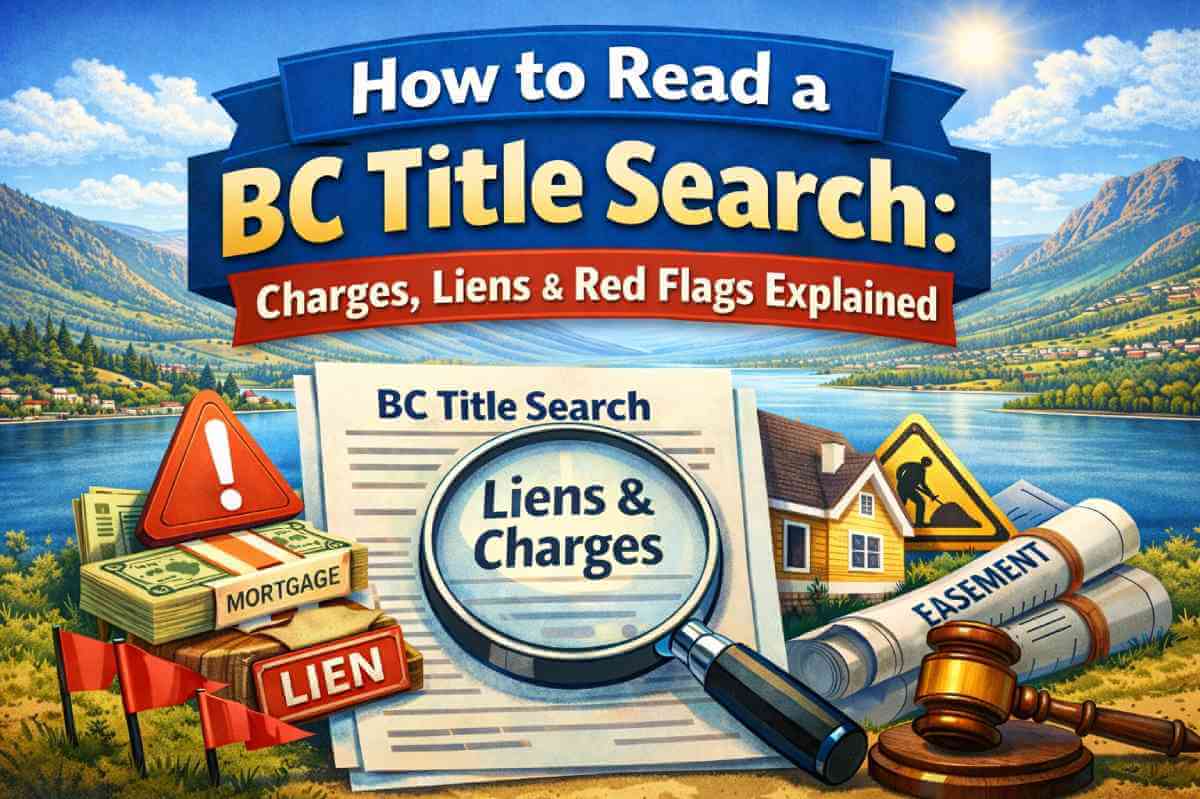
How to read a Title Search in BC: Charges, Liens & Red Flags Explained
Buying property without understanding how to read a title search in BC is a bit like buying a used car without opening the hood. It might look great on the outside… until you realize there’s something expensive hiding underneath.
A title search tells you what you’re really buying, not just the house, but everything legally attached to it.
And trust me, sometimes that includes surprises you definitely don’t want.Let’s break it down so you can read a title search with confidence and avoid stepping on any legal landmines.
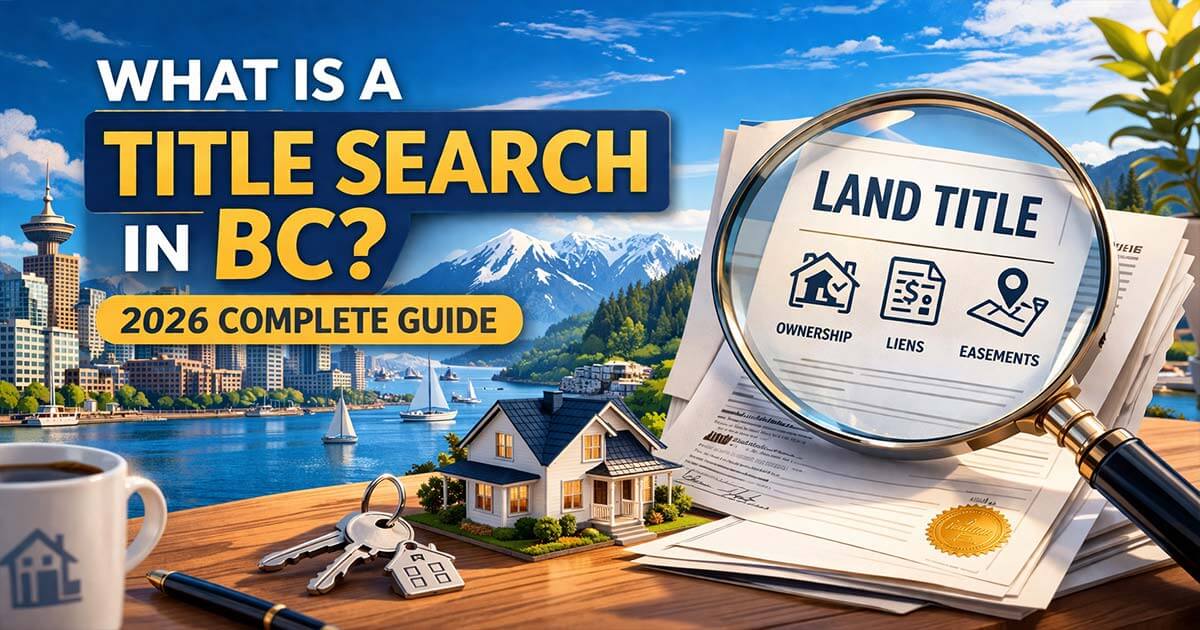
What Is a Title Search in BC?
A title search is an official record from the Land Title Office that shows:
- Who owns the property
- How the property is legally defined
- What claims, restrictions, or obligations are tied to it
Think of it as the property’s permanent record or better yet, its “rap sheet.”
Some properties are clean. Others… not so much.
In BC, land titles are issued and maintained by the Land Title and Survey Authority of British Columbia (LTSA).
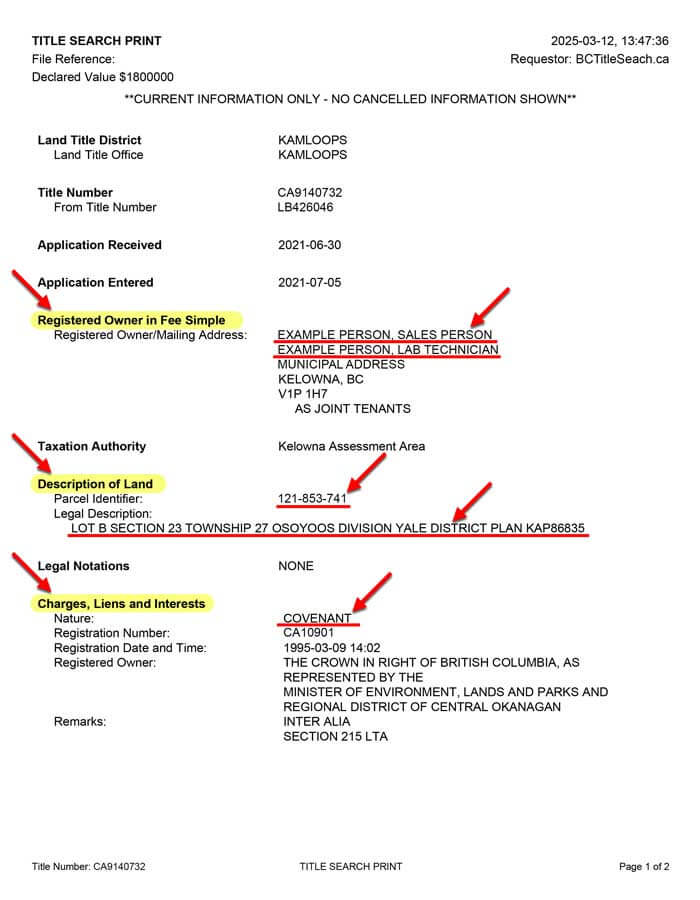
The 3 Key Sections of a Title Search
Once you know where to look, reading a title search becomes much easier.
1. Ownership Section
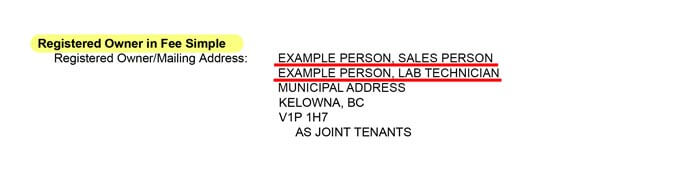
This tells you:
- Who legally owns the property
- How they own it (joint tenants, tenants in common)
Simple rule: If the seller’s name doesn’t match the title, hit pause immediately.
No explanation, no exceptions this is step one for a reason.
2. Legal Description
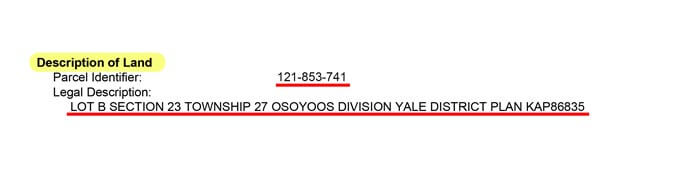
This includes:
- Lot number
- Plan number
- District lot
It may look dry, but this is the exact legal identity of the property.
Think of it like a fingerprint.
The street address is just a nickname this is what actually matters legally.
3. Charges, Liens, and Encumbrances
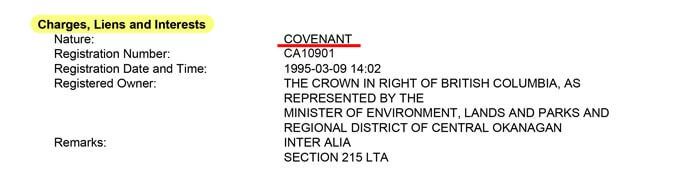
This is where things get interesting and where most people get into trouble.
This section lists everything attached to the property that isn’t ownership.
And yes, this is where the skeletons tend to hide.
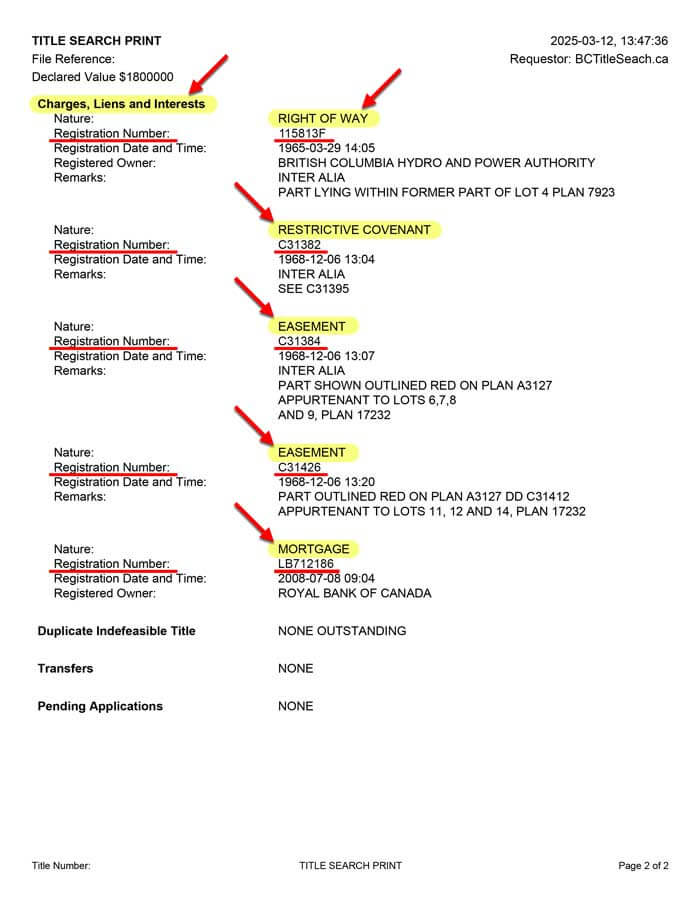
What Are Charges on a BC Title?
A “charge” is any legal claim or interest registered against the property.
Common examples include:
- Mortgages
- Easements
- Covenants
- Rights of way
- Liens
Charges don’t leave when the owner leaves.
They stay with the property.
So when you buy, you’re not just buying the house you’re inheriting its history.
Understanding Liens on Property in BC
A lien is basically someone saying:
“I’m owed money, and this property is my leverage.”
Common types include:
- Builder’s liens (unpaid contractors)
- Court judgment liens
- Tax liens
Think of a lien like a sticky note on the property that says:
“Don’t ignore me I get paid first.”
And in many cases, they must be cleared before a sale can go through.
Encumbrances Explained (The Fine Print That Bites)
Encumbrances are restrictions on how you can use the property.
They don’t always cost you money but they can absolutely cost you freedom.
Examples include:
- Limits on building size or height
- Restrictions on secondary suites
- Utility easements
- Shared access routes
This is where dreams quietly get crushed.
That backyard suite you were planning?
That second driveway?
That extension?
An encumbrance can shut it all down. In many cases, you will need to review a full range documents to understand what all the charges means. You can order registered documents to see complete details.
The Biggest Red Flags to Watch For
This is where you need to slow down and pay attention.
1. Too Many Charges
A long list of charges can signal:
- Financial complexity
- Risk exposure
- A property with a complicated past
Not always bad but definitely worth digging into.
2. Builder’s Liens
These are time-sensitive and can completely derail a deal.
If you see one, don’t “hope it’s fine.”
Get clarity immediately.
3. Restrictive Covenants
These are rules someone wrote years ago that still apply today.
And they don’t care about your renovation plans.
4. Easements and Rights of Way
Translation:
Someone else may have legal permission to use part of your property.
Driveways. Pathways. Utility access.
Sometimes harmless… sometimes not.
5. Anything You Don’t Understand
This is the biggest one.
If you read something and think,
“Hmm, I’m sure that’s fine…”
That’s exactly when it’s not fine.
Ready to Get Your Documents?
Official land title reports, easements, covenants, and more - delivered fast, secure, and ready to use.
Real-World Example (This Happens More Than You Think)
Picture this:
You buy a property thinking you’ll add a suite or expand the home.
Then you discover:
- A covenant prevents additional living space
- A utility easement cuts through your yard
- There’s an unresolved lien from past work
Now your plans and budget are off track.
All of this was sitting quietly in the title search the entire time.
How to read a Title Search in BC Step-by-Step
Here’s a practical way to approach it:
- 1. Confirm the owner matches the seller
- 2. Verify the legal description is correct
- 3. Review every listed charge
- 4. Flag anything unfamiliar
- 5. Investigate before moving forward
Don’t rush this. A 5-minute skim can cost you years of regret.
When to Get Professional Help
Even experienced buyers don’t catch everything.
You should consider help if:
- There are multiple or complex charges
- Legal language isn’t clear
- You’re planning renovations or development
Because once you own the property you own the problems too. Many people also assume all information is visible at a glance. However, additional details are often explained in supporting documents or covered in common questions.
Get Your Title Search in BC Quickly and Easily
At BC Title Search, we make it easy to get accurate property title reports fast.
No confusion. No guesswork. Just clear information so you can move forward with confidence.
Order your BC title search today and make sure you know exactly what you’re buying.
Download our FREE Title Search Checklist before you review your title.
Frequently Asked Questions: How to read a Title Search in BC
What is included in a BC title search?
A BC title search includes the property owner’s name, legal description, and any registered charges such as mortgages, liens, easements, or covenants. It provides a complete legal snapshot of the property and reveals any restrictions or financial claims attached to it.
What are charges on a BC title?
Charges on a BC title are legal interests registered against a property, including mortgages, liens, easements, and covenants. These charges remain with the property even when ownership changes, which means buyers must review them carefully before completing a purchase.
What is the difference between a lien and an encumbrance?
A lien is a financial claim against a property for unpaid debts, while an encumbrance is a broader term that includes any restriction or interest affecting the property, such as easements or covenants. Not all encumbrances involve money, but all liens are encumbrances.
Can you sell a property with a lien in BC?
Yes, you can sell a property with a lien in BC, but the lien typically must be paid off or resolved before the sale is completed. In most cases, the lien is cleared using proceeds from the sale during the closing process.
How do I remove a charge from a title in BC?
To remove a charge from a title in BC, the obligation associated with the charge must be satisfied, such as paying off a mortgage or resolving a lien. Once cleared, a discharge document is filed with the Land Title Office to remove the charge.
What are red flags in a title search?
Red flags in a title search include multiple or unusual charges, builder’s liens, restrictive covenants, or unclear legal language. These issues can indicate financial risk or limitations on property use and should always be reviewed carefully before proceeding.